

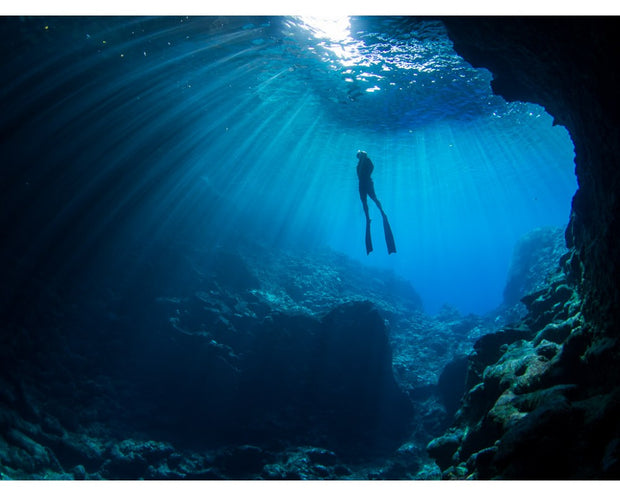
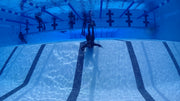
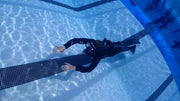
Freediving is the art of breath-hold diving—exploring the underwater world without the use of scuba gear. This ancient practice dates back to cultures that dived for sponges and seafood, with mentions by Plato as early as the Archaic Period. Today, freediving has evolved into a popular sport for ocean lovers, offering a serene and challenging way to connect with the underwater world.
Our freediving course is a self-paced training program designed to help you build the skills, techniques, and confidence needed to freedive safely and effectively. Whether you're new to freediving or looking to refine your skills, this course will guide you from the basics to deeper dives, with optional spearfishing as part of your journey.
✅ Self-Paced Learning: You decide how quickly you progress! While we suggest an 8-week guideline, you can attend pool sessions as often as needed before advancing to ocean dives.
✅ Expert Instruction: Learn breath-hold techniques, equalization, and safety protocols from experienced freedivers.
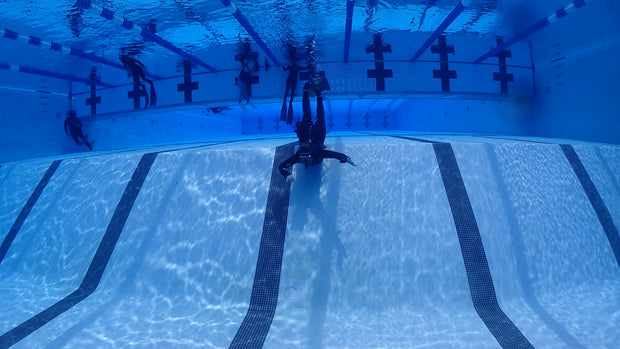
✅ Real-World Practice: Start in the pool, then advance to open water boat trips once comfortable. By the end of the course, our goal is for you to confidently dive up to 40 feet for up to 2 minutes.
📌 This is a training course only and does not include a PADI freediving certification.
💰 Pool Entry Fees – $35 per session, paid directly to the facility upon entry.
💰 Boat Trips – $200 per trip, required for open water sessions.
💰 Gear – Students must have their own freediving gear for safety and familiarity.
✔️ Freediving mask & snorkel
✔️ Wetsuit (5mm recommended)
✔️ Long fins & booties
✔️ Weight belt & weights
✔️ Socks & gloves
🛍️ We offer a 15% student discount on all gear purchased through our shop!
📌 Why Do You Need Your Own Gear?
Training in your personal equipment builds confidence, promotes safety, and ensures a seamless transition into independent freediving.
Interested in spearfishing? You’ll need a speargun and a valid fishing license. During the final ocean session, you can choose to learn sustainable hunting techniques and apply your freediving skills in a real-world setting.
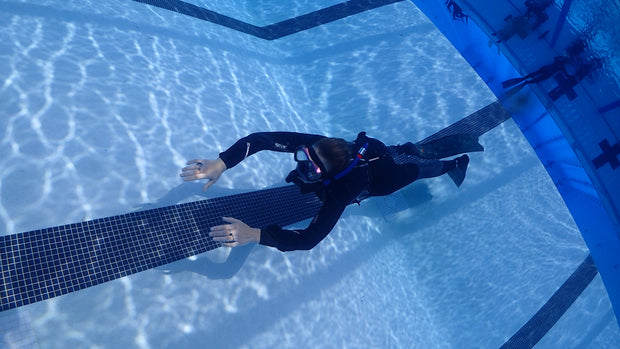
Pool Practice (Weeks 1–4):
✅ Entry techniques, breath-hold exercises, equalization, and safety skills.
First Ocean Dive:
✅ Experience freediving in kelp forests & reefs while refining your skills.
Pool Practice (Weeks 5–8):
✅ Advanced equalization, extended dive times, and breath-hold progression.
Final Ocean Dive & Spearfishing (Optional):
✅ Put it all together with deeper dives and, for those interested, spearfishing training.
🌎 Supportive Community – Join a passionate freediving network.
🌊 Eco-Conscious – We promote sustainability and ocean conservation.
📅 Flexible Learning – Progress at your own pace with unlimited pool practice.
🧑🏫 Expert Guidance – Learn safely from highly experienced instructors.
1️⃣ Reserve your first pool session today!
2️⃣ Visit our Dive Calendar to book your sessions.
3️⃣ Visit our shop to get your freediving gear & student discount.
Take the plunge and explore the ocean like never before! 🌊✨
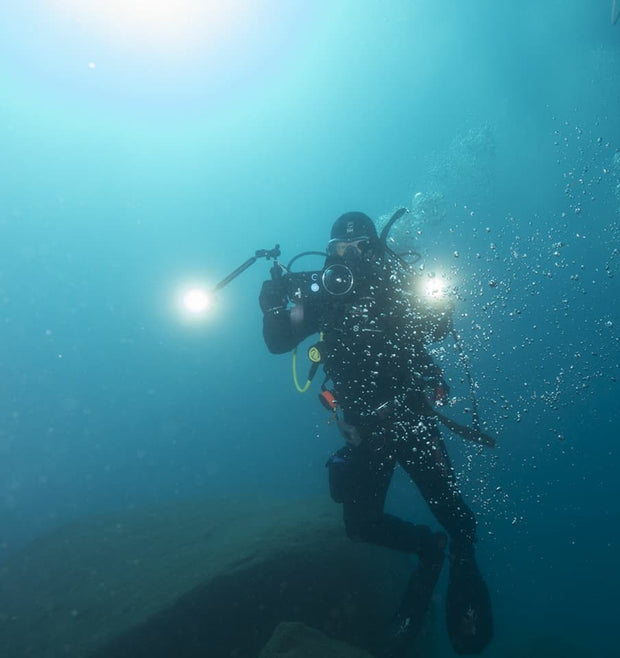
Underwater photography is one of the most popular diving specialties, and with so many underwater cameras to choose from, it has become easier and more fun than ever to capture images of your underwater scuba adventures. The PADI Digital Underwater Photographer course gets you going quickly, whether you use a point-and-shoot camera or a sophisticated dSLR like the pros.
PADI (Junior) Open Water Divers who are at least 10 years old are eligible to take the Digital Underwater Photographer course.
Because underwater photography is also popular with snorkelers, there is an option for avid snorkelers and skin divers to complete the course. Check with us if this interests you.
Through hands-on training during two scuba dives and guidance from your PADI Professional, you’ll discover:
Get credit! The second dive of this PADI Specialty Diver course may credit as an Adventure Dive toward your Advanced Open Water Diver certification – ask your instructor about earning credit.
Beyond using basic scuba equipment, you’ll need a digital underwater camera and a computer or other device for downloading and viewing your images. Your PADI Pro may suggest additional equipment and accessories depending on your camera system. .
Q. What do I do after purchasing the Digital Underwater Photography Specialty Course?
After you purchase the Specialty Course, an instructor will contact you according to your account via email or phone call. Then, you will schedule for meeting.
You will come to our dive shop on the scheduled day and will go through orientation, instuctions, and you will schedule further appointments for swimming pool and ocean dive sessions.
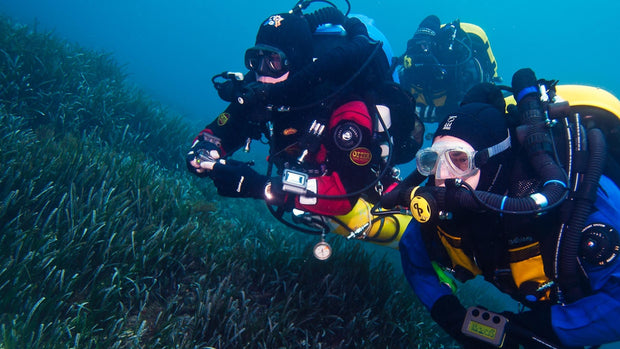
If you’re interested in rebreathers for their silence and maximized no stop dive time, and are happy to stay within recreational diving depth limits, then the PADI Advanced Rebreather Diver course is for you. This course builds on your PADI Rebreather Diver certification by expanding your knowledge, adding a bailout cylinder, and training you to dive as deep as 40 metres/130 feet. If you aren’t a certified rebreather diver yet, no problem – ask your PADI Rebreather Instructor about combining the PADI Rebreather and Advanced Rebreather Diver courses.
To enroll in the PADI Advanced Rebreather Diver course, you must:
To dive deeper than 30 metres/100 feet, you must be a PADI Deep Diver.
Note that qualifying certifications from other diver training organizations may apply – ask your PADI Rebreather Instructor.
Through self-study and instructor-guided sessions, you’ll learn about scrubbers, oxygen consumption and bailout requirements, including how to configure a bailout cylinder system. Because rebreathers vary significantly, you’ll also study the manufacturer’s literature for the type of rebreather you’ll train on. During one confined water dive and four open water dives, you’ll practice bailout and other emergency procedures, as well as planning and executing deep rebreather dives.
Beyond your mask, fins and exposure suit, plus collapsible snorkel, if you have one, your PADI Rebreather Instructor will advise you about the Type R rebreather you’ll use. Your instructor will also fit you with a bailout cylinder system with open-circuit regulator and SPG.
After certification, you’ll need to qualify if you want to use a different rebreather model because procedures vary with each model. However, you don’t need to repeat the entire course. Just take a PADI Rebreather Qualifier program that focuses on the knowledge and skills needed to use a different Type R rebreather model.
Your instructor will make sure that all Type R rebreathers used in PADI courses meet requirements, such as being third party tested and that manufacturers ensure their rebreathers meet a comprehensive list of requirements.
Interested in technical diving? The PADI Advanced Rebreather Diver course may credit toward the Tec 40 CCR Diver course on the same rebreather. For more information, find a PADI Dive Center or Resort that offers PADI TecRec courses.
Frequently Asked Questions
Q. What do I do after purchasing the Advanced Rebreather Diver Specialty Course?
After you purchase the Specialty Course, an instructor will contact you according to your account via email or phone call. Then, you will schedule for meeting.
You will come to our dive shop on the scheduled day and will go through orientation, instuctions, and you will schedule further appointments for swimming pool and ocean dive sessions.